
The Short Answer
Getting a garage door ready for winter in Germantown means doing four things before the first hard freeze: swap in cold-weather lubricant, replace worn weatherstripping, test the balance and springs, and confirm your opener's battery backup and sensors are working. These five minutes of checks now prevent the 6 a.m. calls we get every January from doors that won't open, won't close, or snapped a spring in the driveway.
Why Winter Is Hard on Garage Doors Here
Washington County winters bring deep cold, repeated freeze-thaw cycles, and months of road salt tracked in on tires and boots. Steel contracts in the cold, rubber seals stiffen and crack, and grease that worked fine in September can turn gummy or stiff at ten below. None of this is dramatic on its own, but it adds up to doors that bind, springs that work harder than they should, and openers that hesitate on the coldest mornings.
1. Switch to a Cold-Weather Lubricant
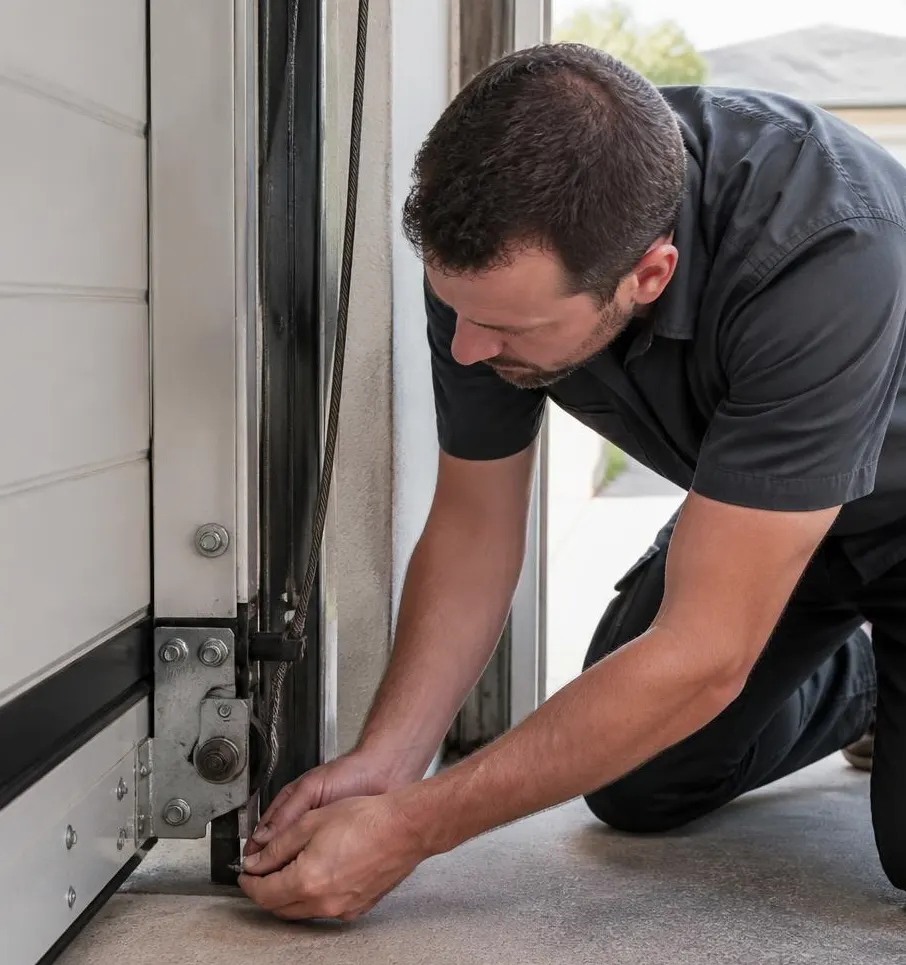
Standard grease thickens in cold temperatures, which makes rollers, hinges, and the torsion spring itself move stiffly. Use a silicone-based or lithium-based garage door lubricant rated for low temperatures, and apply it to the rollers, hinges, springs, and the track's moving contact points. Avoid WD-40 as a long-term lubricant — it's a solvent that displaces old grease short-term but doesn't hold up over a Wisconsin winter.
2. Replace Cracked or Thin Weatherstripping
Check the rubber seal along the bottom of the door and the vinyl stripping around the frame. If it's stiff, cracked, or compressed flat, it's already letting in cold air, snowmelt, and fine blown snow. Worn seals are also one of the most common reasons an attached garage stays colder than it should, which matters if pipes, a water heater, or a freezer share that space. Replacement seals are inexpensive and straightforward to swap before the real cold sets in.
3. Test the Balance and Look Hard at the Springs
Disconnect the opener and lift the door manually about halfway. It should stay in place on its own. If it drifts down or feels heavy, the springs are losing tension — and cold metal is more brittle than warm metal, so a spring that's been limping along all fall is more likely to snap in January than in July. A broken spring under tension is dangerous to handle yourself; if the balance test fails, that's a job for a professional, not a weekend project.
4. Confirm the Opener's Battery Backup and Sensor Alignment
Winter storms mean power outages, and a garage door opener without a working battery backup leaves you stuck with a door you can't lift by hand easily if the springs are already under strain. Test the backup battery now, not during the first outage. Also wipe down the photo-eye sensors near the floor — road salt and slush splash up and coat them, which can cause the door to refuse to close or reverse unexpectedly.
5. Clear the Track of Grit and Road Salt
Salt and sand tracked in from the driveway settle into the bottom track and rollers over the season. Wipe the track down with a damp cloth and check for rust starting on the rollers or hinges. A build-up of grit is a common cause of a door that sounds rough or jerky, and it accelerates wear on hardware that's already working harder in the cold.
6. Think About Insulation if the Garage Stays Cold
If your garage is attached and used for more than parking — a workshop, laundry, or storage for anything that can freeze — an uninsulated door is a weak point in the building envelope. Insulated doors or retrofit insulation kits reduce how much heat escapes and how cold the interior gets during an extended cold snap, which matters more once temperatures stay below freezing for days at a time.
When to Call Germantown Garage Door Experts
If the balance test fails, the door is noticeably heavier on one side, or you hear a loud bang followed by the door refusing to move, stop and call us — that's usually a broken spring, and our Spring Replacement service handles it safely with the right tools and tension equipment. If the opener is hesitating, the backup battery won't hold a charge, or the sensors keep tripping for no clear reason, our Garage Door Opener Repair & Installation team can diagnose whether it's a wiring issue, a dying battery, or a sensor that needs realignment or replacement. We also offer a straightforward Garage Door Maintenance visit that covers lubrication, hardware checks, and balance testing in one trip, which is the easiest way to head into winter knowing the door won't fail you on the coldest morning.
If you're in Germantown, Menomonee Falls, Mequon, Richfield, Hubertus, Jackson, Cedarburg, or West Bend and want your garage door checked before the snow flies, call Germantown Garage Door Experts today to schedule a pre-winter visit.