
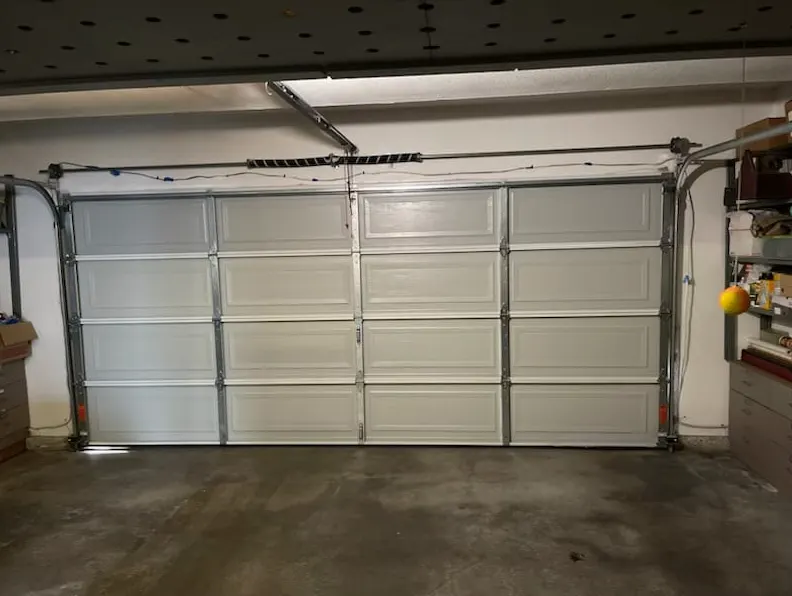
Short answer: if the damage is truly isolated and the door is still young, replace the panel. If the door is older, mismatched, or has more than cosmetic damage, replace the whole door.
Panel damage around here usually comes from the same handful of culprits: a plow blade clipping the bottom section in a snowstorm, a car backing out before the door finishes opening, ice buildup that cracks a panel when the door forces through it, or hail and wind-driven debris from a summer storm. Whatever the cause, the real question isn't "can this panel be fixed" — it's whether fixing just that one section is the smarter move versus starting over with a new door.
What a Panel Replacement Actually Involves
A panel swap means removing the damaged section, ordering a matching replacement panel, and installing it in place while leaving the rest of the door, track, opener, and hardware untouched. For this to work well, a few things need to line up:
- The damage is contained to one section — no bent track, no warped frame, no cracked panels elsewhere.
- The door is a model where matching panels are still available. Older or discontinued styles can be hard to match exactly.
- The rest of the door is in good shape. There's little point patching one panel on a door that's already showing rust, fading, or wear everywhere else.
When those conditions are met, a panel replacement is quick, keeps the rest of your working system intact, and costs a fraction of full replacement.
What Full Replacement Involves
A full replacement means a new door, top to bottom — new panels, new hardware, often new weatherstripping and sometimes a new opener if the old one isn't compatible or is also failing. It's a bigger job and a bigger upfront cost, but it resets the clock on the whole system rather than just the visible damage.
Side by Side: What You're Actually Trading Off
Panel Replacement
- Cost: Lower upfront, since you're only paying for one section plus labor.
- Speed: Usually a same-day or next-day fix once the part is in hand.
- Risk: Color and texture match can be imperfect, especially if the door has faded from UV exposure or the style is older. You're also not addressing wear on the rest of the door.
- Best for: Newer doors, single clear impact points, homeowners who want the door functional again without a big spend.
Full Door Replacement
- Cost: Higher upfront, but you get a uniform look and a warranty that covers the whole unit, not just a patched section.
- Speed: Takes longer to schedule and install since it's a bigger project with more parts.
- Risk: You're replacing sections that may have had years of life left in them.
- Best for: Doors over 12–15 years old, doors with damage in more than one spot, doors that are already rusting or sagging, or homeowners planning to stay long-term and wanting better insulation and a tighter seal against winter cold.
Where the Decision Gets Harder
The tricky cases are the ones in the middle: a five-year-old door with one bad panel but also some rust starting at the bottom from years of road salt splashing up during winter driving, or a door that looks fine except the damaged panel happens to be a style that's been updated since you bought it. In those situations, it helps to think about what you're protecting against going forward, not just what's broken right now.
Winters here are hard on garage doors — deep cold, ice buildup, and salt brine tracked in from the driveway all accelerate corrosion, especially along the bottom panel and the track. If your damaged panel is also the one most exposed to that wear, a patch job might buy you one season before you're dealing with a second problem spot. That's worth factoring in before you commit to a quick fix.
What's Typical for Most Homes in This Area
For a door under about ten years old with one clean impact — a plow clip, a backed-into dent, a single cracked panel from ice — a panel replacement is usually the right call. It's cost-effective and gets the door sealed and secure again before the next freeze. For doors older than that, or ones that already have rust creeping in along the bottom, multiple dents, or an opener that's also struggling, full replacement tends to be the better long-term investment. You avoid paying twice: once for the patch, and again a year or two later for the parts that were already on their way out.
When to Call Germantown Garage Door Experts
If you're not sure which category your door falls into, that's exactly the kind of call worth making before winter sets in hard. We'll inspect the panel, the track, and the rest of the door, tell you honestly whether a panel swap will hold up or whether you're better off with full Garage Door Installation, and handle whichever route makes sense — including Garage Door Repair for the track and hardware if the impact knocked anything out of alignment. We'd rather give you a straight answer than sell you a bigger job than you need.
If you've got a damaged panel and aren't sure what it needs, call Germantown Garage Door Experts and we'll take a look before the next cold snap makes the decision harder.